Ceeniq · Shot Blueprint
Wide · naturalistic lighting
July 13, 2026
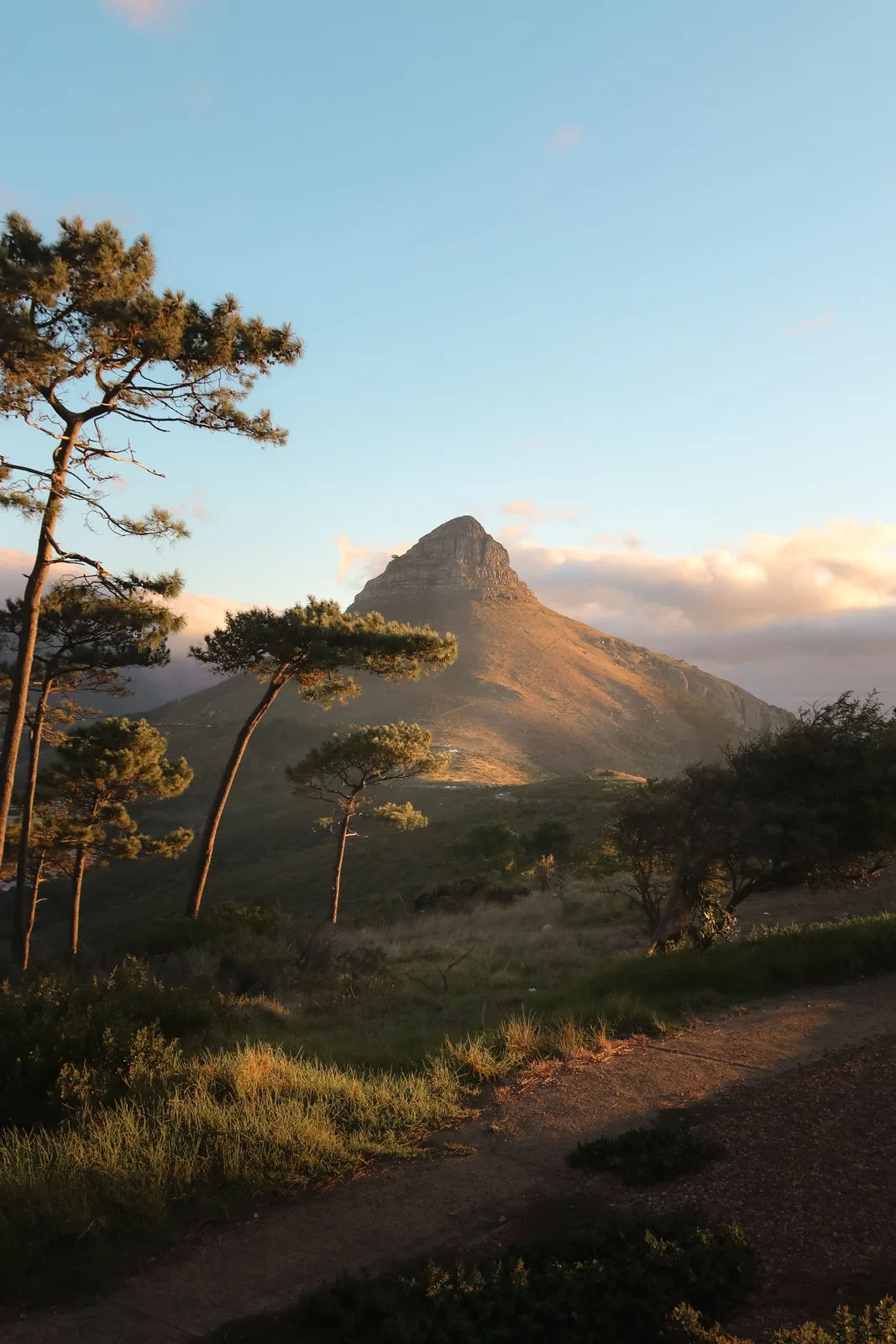
This shot captures a majestic mountain landscape during the golden hour, using natural light to create depth and warmth. The composition effectively frames the distant mountain with foreground trees and a leading path, drawing the viewer's eye through the scene. The soft, warm light emphasizes the natural beauty and creates a serene, expansive mood.
This is a classic golden hour landscape shot. The entire execution hinges on being in the right place at the right time. We are using the low, warm sun as a key light to create texture and mood, and composing with natural layers of depth to make a static wide shot feel grand and immersive.
Camera setup
- Lens
- I'd estimate a lens in the 70-85mm range on a full-frame sensor. This focal length provides gentle compression, making the background mountain feel more substantial and closer to the foreground trees without looking unnatural. It isolates the key elements nicely. A great choice would be a Canon 70-200mm f/2.8L IS or a Sigma 85mm f/1.4 Art. For a more budget-friendly option, any manufacturer's 85mm f/1.8 prime or a standard 24-105mm kit lens zoomed in will get you very close.
- Position
- The camera is positioned at about chest height, maybe five feet off the ground, on a tripod. It's looking straight-on toward the mountain, not tilted up or down. The distance to the nearest trees is probably 30-40 feet, which allows them to act as a frame without being out of focus. This is a static shot; let the light and the clouds do the moving.
- Settings
- For maximum sharpness across the landscape, I'd stop down the aperture to between f/8 and f/11. With the low light of sunset, keep your ISO as low as your camera allows, ideally ISO 100 or 200, to keep the shadows clean. This will dictate your shutter speed; on a tripod, you can let it fall where it needs to, perhaps 1/60s or 1/125s. If you're handholding, you'll need to open up the aperture or bump the ISO to get a safe shutter speed above 1/100s.
- Alternatives
- A 50mm lens would render the scene more naturally, making the mountain appear more distant and less compressed; it would feel like you're standing there. A wider 35mm lens would exaggerate the foreground, making the path and grasses feel vast while diminishing the mountain, good for emphasizing a character's journey. A 135mm lens would dramatically compress the space, making the mountain look absolutely colossal right behind the trees, creating a more abstract, graphic composition.
Lighting setup
- 1key · at eye level · far
- 2ambient · above · far
1.Key: The Sun
Low in the sky, far off to the camera's right and slightly behind the subject. This is a classic 'Rembrandt' angle for a mountain, creating a strong modeling shadow across its face and raking across the foreground to pick out texture in the grass and trees.
This is a hard light source, but its quality is softened by atmospheric haze. The key is timing: this shot only works in the last hour before sunset. You can't fake this quality of light easily. There's no diffusion or flagging here, just pure natural light.
Recreate the look
Starting-point editing settings for each app. Fine-tune against your source image.
Apple Photos
- Exposure
- +0.10
- Highlights
- -30
- Shadows
- +25
- Contrast
- -10
- Black Point
- +5
A slight lift to the overall image.
Protects the detail in the bright clouds and sunlit mountain face.
Opens up the foreground and tree details without looking flat.
Slightly softens the overall contrast before adding warmth.
Keeps the darkest shadows from being pure black.
Equipment list
Full-Frame DSLR or Mirrorless Camera
To capture maximum dynamic range, allowing you to hold detail in the bright sky and the dark foreground shadows.
Budget option: Any APS-C or Micro Four Thirds camera, or even a modern smartphone with RAW capability.
View on Amazon70-200mm f/2.8 or 85mm f/1.8 Lens
Provides the ideal focal length for compression and subject isolation in a landscape like this.
Budget option: A standard 18-55mm or 24-105mm kit lens zoomed all the way in.
View on AmazonSturdy Tripod
Essential for shooting at a low ISO and smaller aperture in fading light, ensuring a sharp, noise-free image.
Budget option: A small, inexpensive travel tripod or simply resting the camera on a stable surface like a rock or backpack.
View on AmazonCircular Polarizer Filter
Can help deepen the blue of the sky, reduce atmospheric haze, and manage reflections on foliage, adding richness and saturation.
Budget option: Skipping the filter and adding a touch of contrast and sky saturation in post.
Creative direction
Art & staging
The composition is all about creating layers. The photographer found a vantage point with a clear foreground (the dirt path and sun-kissed grass), a mid-ground (the framing trees), and a distinct background (the mountain peak). The vertical composition is a strong choice, giving the sky room to breathe and emphasizing the mountain's height. The path on the right acts as a leading line, inviting the viewer into the scene. Staging this shot is entirely about location scouting and patience.
Director's commentary
This is a shot that establishes majesty and peace. It's the kind of frame you open a film with, or use to signify a moment of profound calm or arrival for a character. It says 'this place is important.' When directing an actor here, you don't need much. Let them simply stand and observe, taking it all in. The environment does the heavy lifting. Their stillness in the face of such a grand landscape will communicate a sense of awe, contemplation, or perhaps the weight of a decision they have to make.
On a budget
This shot is 90% location and timing, which are free. Use any camera you have, even a smartphone with a 'pro' mode. A cheap, lightweight tripod is your most important tool, allowing you to shoot with a low ISO for clean images as the light fades. Instead of a fancy lens, just use your feet to 'zoom' and find the composition that works. Focus on being at a scenic overlook an hour before sunset and watch how the light shapes the land.