Ceeniq · Shot Blueprint
Wide · naturalistic lighting
July 21, 2026
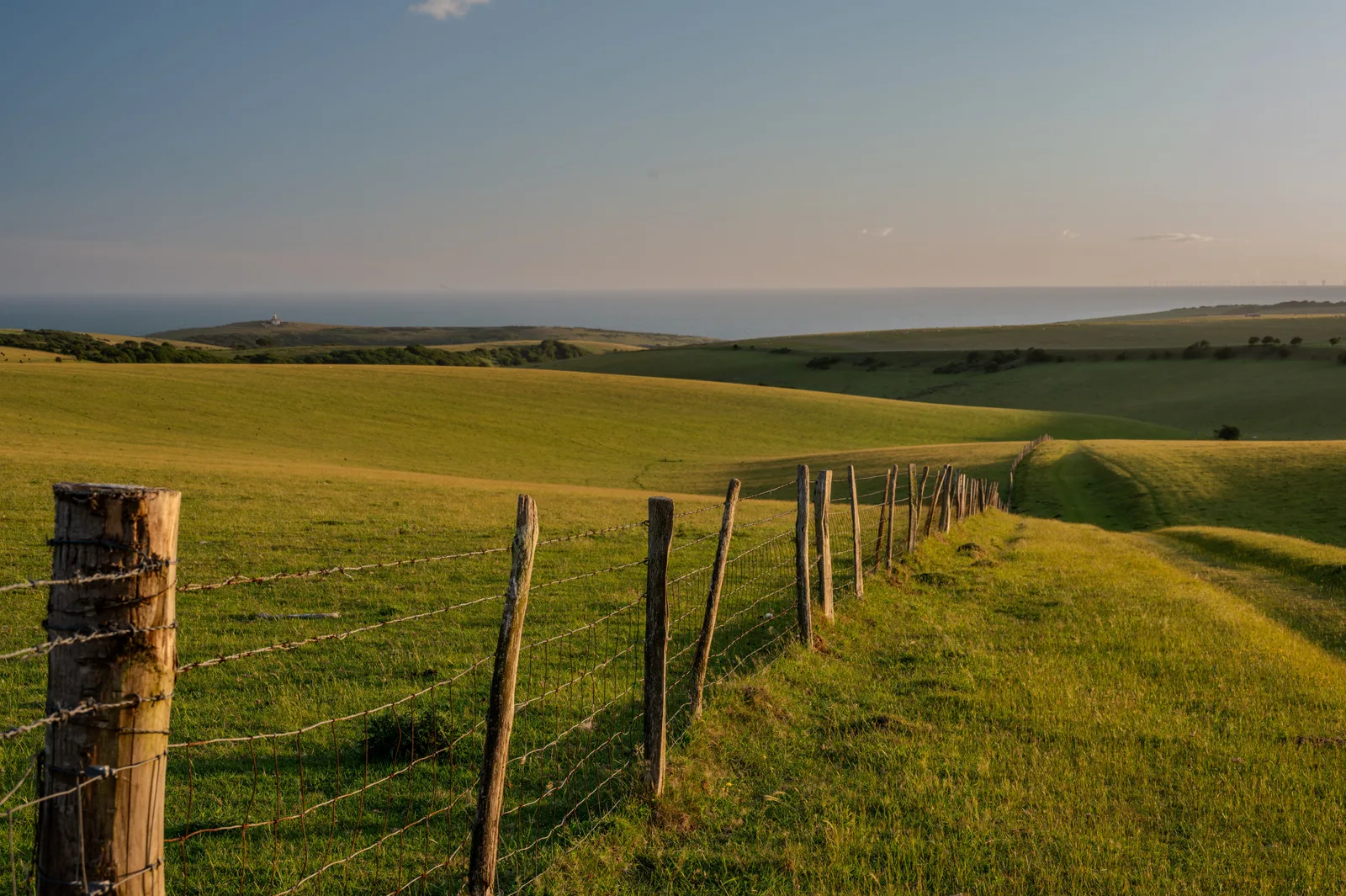
This wide landscape shot expertly uses leading lines to guide the viewer's eye across rolling hills towards a distant horizon. Bathed in the warm glow of golden hour, the frame evokes a sense of peace and natural grandeur. The low sun creates dramatic shadows and highlights, adding depth and texture to the scene.
This is a classic golden hour landscape shot that uses a medium telephoto lens to compress the rolling hills and a strong leading line in the foreground to create depth. The success of this shot lies in the specific time of day, careful composition, and a color grade that enhances the natural warmth of the low sun.
Camera setup
- Lens
- An 85mm lens on a full-frame sensor is a strong choice here. It provides enough compression to make the background hills feel present and stacked without overly flattening the scene. The focal length allows you to stand back from the foreground fence, rendering it naturally while keeping it as a strong anchor. A good budget alternative would be a kit zoom lens (like a 24-105mm or 70-200mm) set around 85mm.
- Position
- The camera is placed at chest height, roughly 4 to 5 feet from the ground. It is positioned to the side of the fence line, allowing the fence to enter the frame from the bottom left and recede diagonally into the middle distance. This creates a powerful leading line that guides the viewer's eye through the landscape.
- Settings
- To achieve deep focus from the foreground fence post to the distant horizon, stop down the aperture to around f/8 or f/11. Since it's golden hour and light is fading, use a tripod to allow for a low ISO (100-200 for maximum quality) and a correspondingly slower shutter speed, perhaps around 1/60s. If shooting handheld, you would need to increase the ISO to 400-800 to maintain a safe shutter speed of 1/125s or faster.
- Alternatives
- A 50mm lens would make the scene feel wider and more immediate, emphasizing the foreground fence post but making the distant hills feel smaller and further away. A 135mm lens would heavily compress the scene, stacking the hills together for a more graphic, almost abstract look, but you would need to be much further from the foreground element. A 35mm lens would create a classic wide-angle landscape, with significant foreground distortion on the fence and a vast but distant background.
Lighting setup
- 1key · at eye level · far
- 2fill · overhead · far
1.Key: Late Afternoon Sun
The sun is low in the sky, positioned to the camera's right and slightly behind the scene. This creates a 3/4 backlight effect, raking across the landscape.
This is the primary light source, responsible for the warm golden color, the long shadows that define the shape of the hills, and the bright highlights on the edges of the fence posts and grass. The light quality is hard but has been softened by atmospheric haze, giving the shadows defined but not razor-sharp edges.
Recreate the look
Starting-point editing settings for each app. Fine-tune against your source image.
Apple Photos
- Warmth
- +30
- Tint
- +5
- Highlights
- -25
- Shadows
- +35
- Black Point
- +10
Enhances the golden hour feeling.
Adds a subtle magenta cast to the light.
Recovers a bit of detail in the sky and bright parts of the grass.
Lifts the shadows to reveal texture in the darker grass.
Prevents shadows from being fully crushed.
Equipment list
Tripod
To ensure a sharp, stable image with a low ISO and small aperture in diminishing light.
Budget option: Any basic, lightweight travel tripod will suffice.
View on Amazon85mm f/1.8 Prime Lens
Provides the ideal compression and sharpness for this type of landscape.
Budget option: A standard 18-55mm or 24-105mm kit lens zoomed to its maximum focal length.
View on AmazonFull-Frame Camera
Maximizes dynamic range to capture detail in both the bright highlights and deep shadows.
Budget option: Any APS-C or Micro Four Thirds camera with manual controls.
View on AmazonCircular Polarizer Filter
Can be used to deepen the blue of the sky and reduce any unwanted glare from the grass, increasing color saturation.
Budget option: A more affordable CPL from a brand like K&F Concept or Neewer.
View on Amazon
Creative direction
Art & staging
The location is the most critical element. You need rolling terrain with a strong foreground subject, like this weathered wooden fence with barbed wire. The fence provides a crucial leading line and a sense of rustic history. The background is kept clean and simple: hills, a sliver of ocean, and a clear sky. The lack of modern structures or distractions is essential to the shot's tranquil mood.
Director's commentary
This is a shot about journey, tranquility, and the relationship between humanity and nature. The fence is a man-made object, but it feels integrated and weathered, guiding us through a vast, peaceful landscape. It can be used to establish a new location, to give a character a moment of quiet reflection, or to signify the beginning or end of a long road. If a character were in this shot, they would be small in the frame, walking along the fence line away from camera, emphasizing the scale of the world around them.
On a budget
This shot is almost entirely about timing and location, not expensive gear. Use any DSLR or mirrorless camera with a kit lens zoomed to its longest focal length. The most important piece of equipment is a basic, inexpensive tripod. This will let you use a low ISO for a clean image and a small aperture for deep focus, even as the light fades. Spend your time scouting for the perfect fence line and show up an hour before sunset.