Ceeniq · Shot Blueprint
Wide · naturalistic lighting
July 10, 2026
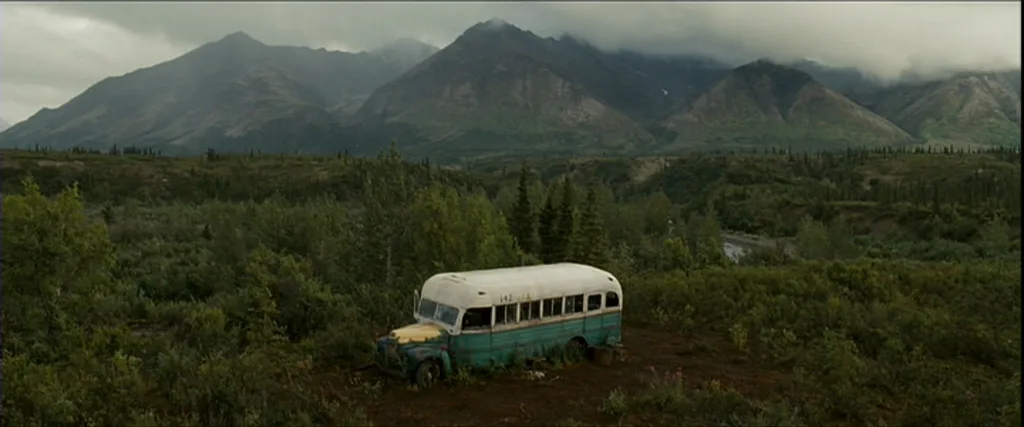
This wide shot expertly captures the solitude of a dilapidated bus amidst an expansive, wild landscape, framed by imposing mountains under an overcast sky. The smallness of the bus against the vast wilderness immediately conveys themes of isolation and the powerful indifference of nature. The muted color palette and soft natural light enhance the contemplative and melancholic atmosphere.
This is a classic 'man in nature' wide shot, designed to establish a sense of profound isolation. The approach relies on natural, overcast light to create a soft, melancholic mood. Success hinges on finding a location that provides natural scale and depth, using a standard-to-wide lens to capture it without distortion, and applying a desaturated, cool color grade to finish the look.
Camera setup
- Lens
- A 40mm lens on a Super 35mm sensor is a good estimate. This focal length is wide enough to feel expansive but avoids the dramatic distortion of an ultra-wide, giving the landscape a grounded, realistic feel. A Cooke S4/i or Zeiss Master Prime would provide the clean, yet pleasing, cinematic quality seen here. A cheaper alternative would be a high-quality zoom like a Fujinon 18-55mm set to 40mm, or a vintage stills lens like a Takumar 35mm for a softer feel.
- Position
- The camera is positioned on a slight elevation, perhaps a small hill or simply built up on a dolly or high-hat, about 50 to 75 yards away from the bus. It's angled slightly down, which helps separate the bus from the dense midground foliage. The camera is locked off on a sturdy tripod, completely static, allowing the viewer to simply absorb the environment.
- Settings
- On an overcast day, you have a lot of soft light to work with. I'd aim for a deeper stop like T5.6 or T8 to keep the mountains in the background relatively sharp, emphasizing the scale. Set the camera to its native ISO, likely 800. Shutter angle should be 180 degrees (1/48th of a second at 24fps). You will almost certainly need a neutral density filter, probably an ND 0.6 or 0.9, to achieve that aperture without overexposing.
- Alternatives
- A 28mm lens would make the scene feel more immense and epic, slightly distorting the edges and pushing the mountains further away, further isolating the bus. A 75mm lens would compress the perspective, making the mountains loom directly behind the bus, creating a more claustrophobic and threatening feeling. A 50mm anamorphic lens would introduce classic cinematic artifacts like oval bokeh (if there were focus falloff) and a specific texture, making the shot feel more like a constructed movie moment and less like a raw, naturalistic observation.
Lighting setup
- 1key · overhead · far
- 2fill · below · near
1.Key: Overcast Sky
Directly overhead, extending to the horizon. This is nature's largest softbox.
The thick, uniform cloud cover provides a massive, diffused top light. This eliminates harsh shadows and wraps gently around every object in the scene, from the bus to individual leaves. No artificial light is needed or desired.
Recreate the look
Starting-point editing settings for each app. Fine-tune against your source image.
Apple Photos
- Highlights
- -30
- Shadows
- +20
- Contrast
- -15
- Black Point
- +10
- Saturation
- -25
Softens the bright overcast sky and bus roof.
Lifts detail in the dark green foliage.
Reduces overall contrast for a flatter, softer look.
Prevents shadows from being crushed to pure black.
Creates the muted, melancholic color palette.
Equipment list
ARRI ALEXA Mini or similar cinema camera
To capture the wide dynamic range between the bright sky and the dark foliage with a pleasing, filmic color science.
Budget option: Blackmagic Pocket Cinema Camera 6K
View on Amazon40mm Prime Lens (e.g., Cooke S4/i)
Provides a high-quality, natural field of view without distortion, ideal for landscape work.
Budget option: Sigma 35mm f/1.4 ART series lens
View on AmazonHeavy Duty Tripod (e.g., O'Connor 2560)
Ensures the static shot is perfectly stable, with no vibration or drift.
Budget option: Manfrotto 504X fluid head with a sturdy photo tripod
View on Amazon4x5.65" ND Filter Set
Allows for precise exposure control while maintaining a desired aperture (T-stop) for depth of field.
Budget option: Screw-on Variable ND Filter
View on Amazon
Creative direction
Art & staging
The key is finding a location that provides layers: foreground brush, a midground clearing for the bus, and a background of imposing mountains. The bus itself is the central piece of production design; it must look authentically abandoned and weathered, with visible rust and faded paint. It's placed according to the rule of thirds, low in the frame, making it a focal point that is still dwarfed by its surroundings. The deep focus of the shot ensures the environment feels just as important as the subject.
Director's commentary
This shot establishes the central conflict of the story: humanity's smallness against the indifference of nature. The bus is a failed outpost, a fragile shell in a world that will eventually consume it. By holding on this wide, static frame, we force the audience to confront the scale and silence of the wilderness. It's not just a backdrop; it's the primary antagonist or, perhaps, the ultimate truth. Any character entering this frame is immediately vulnerable. Their actions should be small, quiet, and deliberate, a stark contrast to the overwhelming grandeur around them.
On a budget
This shot is all about location and weather, both of which can be free. Find a vast, open space and wait for a heavily overcast day. Use a consumer mirrorless or DSLR camera shooting in a flat or log profile. A standard kit lens (like an 18-55mm) set around 35-40mm will work perfectly. You need no lighting equipment at all. A sturdy tripod is the only essential piece of gear.