How to read the lighting in any film frame
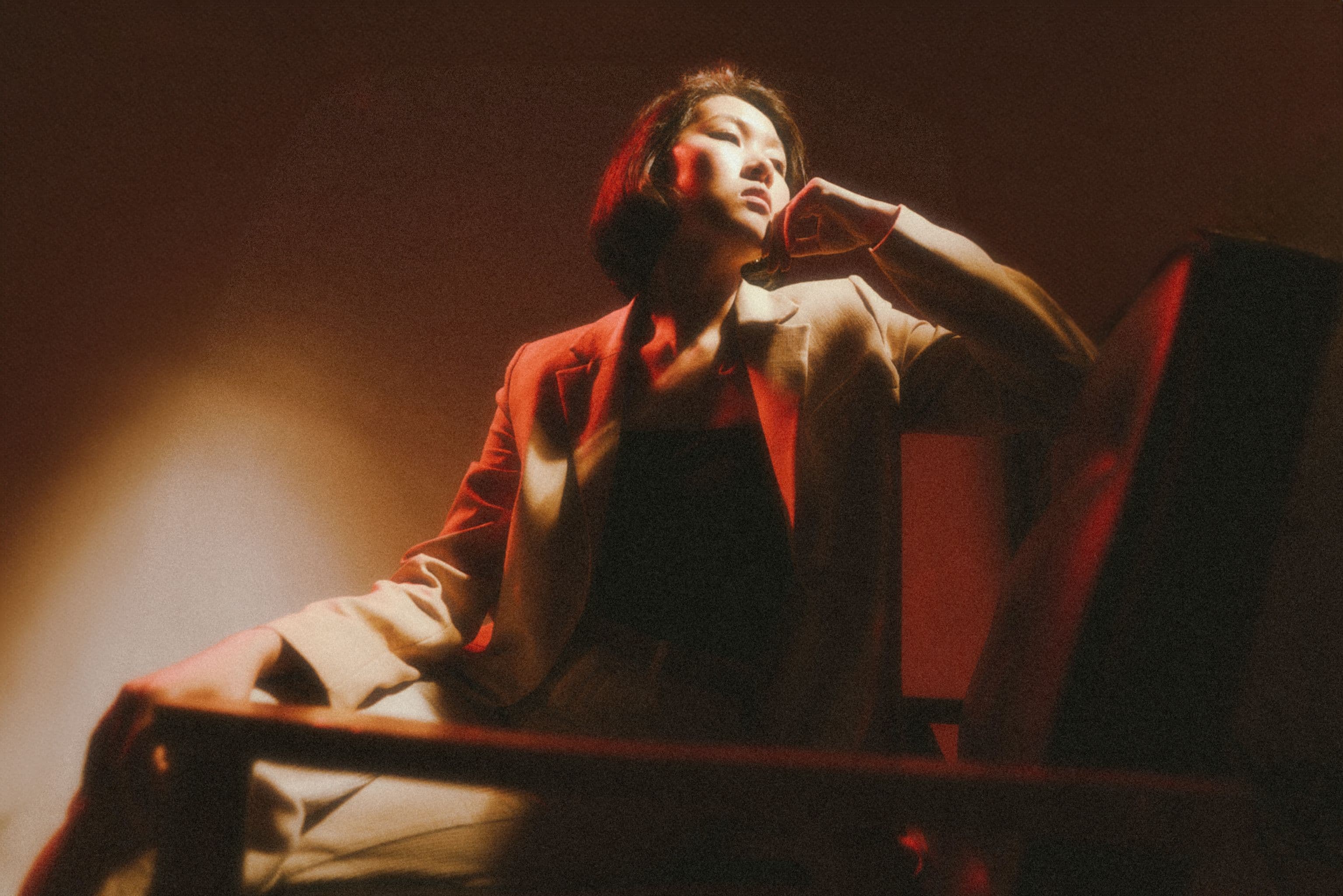
You don't need a light meter or a gear list to understand how a shot was lit. Most of what matters is visible right there in the frame, if you know what to look for. Here's a repeatable, five-step method for reverse engineering the lighting in any still.
1. Find the key light
The key is the dominant source — the one shaping the subject. Look at the shadows on a face or a form: they point away from the key, so trace them backward to find its direction. Ask three quick questions: is it high or low, left or right, and in front of or behind the subject? A key placed high and to the side gives you the classic modelled look; a low or backlit key reads as drama or silhouette.
2. Read the fill
Fill is whatever lifts the shadow side. The question isn't “is there fill?” but “how much?”
- Deep, black shadows mean little to no fill — high contrast, often night, noir, or tension.
- Soft, detailed shadows mean generous fill — flatter, softer, often daytime or comedy.
3. Judge the lighting ratio
Ratio is just the relationship between the key side and the fill side. You don't need a number — you need a read. Squint at the frame until detail drops away, and notice how far apart the bright and dark sides feel. A frame where both sides sit close together is low-contrast; a frame where the shadow side nearly disappears is high-contrast. That gap is doing most of the emotional work in the image.
4. Describe the quality
“Quality” means hard versus soft, and the shadow edge tells you everything. A crisp, sharp-edged shadow comes from a small, hard source (bare bulb, direct sun). A gradual, feathered shadow comes from a large, soft source (a big diffusion frame, an overcast sky, a bounce). Check catchlights in the eyes too — a tiny bright dot is a hard source; a large soft rectangle is a diffused one.
5. Name the motivation
Finally, ask where the light is pretending to come from. Good lighting usually has a motivation — a window, a lamp, a fire, the moon — even when the real source is off-camera. Naming it ties the technical read back to the story: warm, low, flickering light motivated by a fire says something very different from cold, hard light raking in through a blind.
Putting it together
Run those five steps on any frame and you'll have a description a gaffer could act on: a soft key, high and camera-left, minimal fill for a deep shadow side, motivated by a practical lamp. That's the same structure Ceeniq produces automatically when you analyze a frame — and you can browse worked examples on any breakdown in Explore.
Try it on a real frame
Upload a still and see the key, fill, ratio, quality, and motivation read back to you — alongside camera, composition, and color.
Analyze a frame